
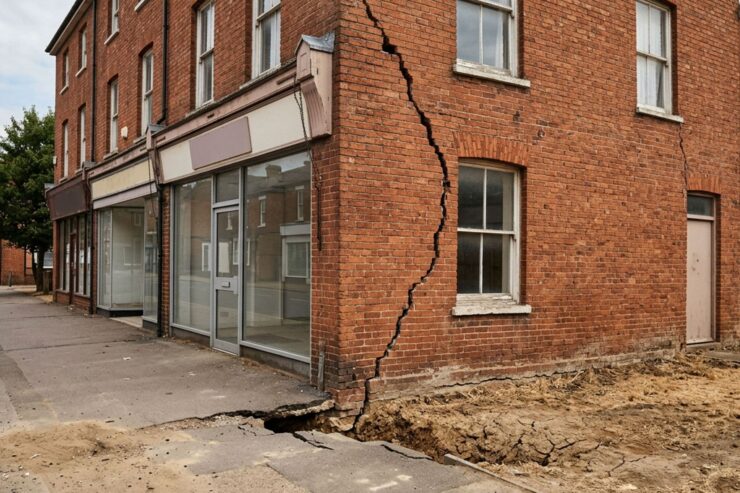
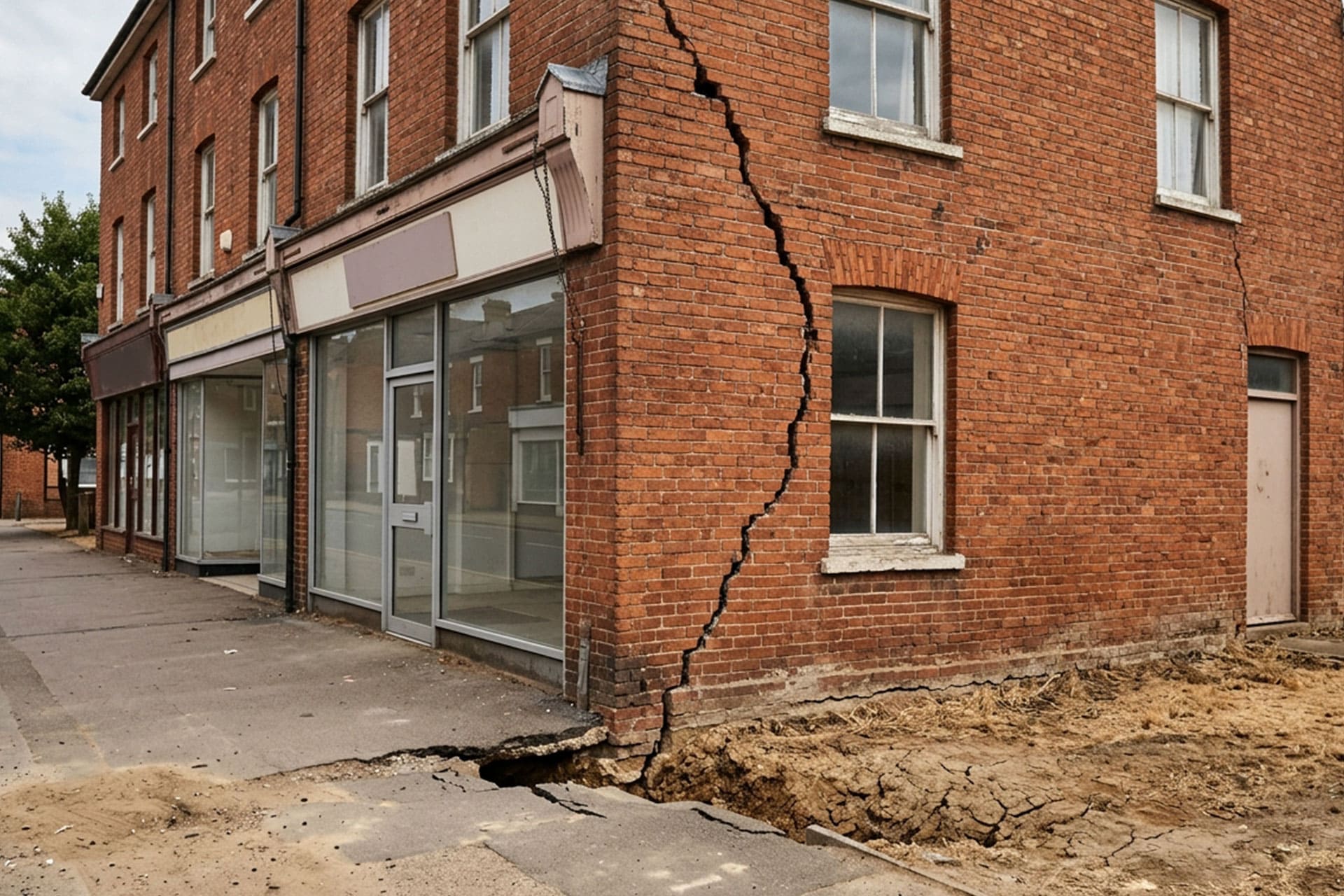
Prolonged periods of hot, dry weather are increasing concerns about subsidence across the UK. In August 2026, the Association of British Insurers (ABI) reported that the average domestic subsidence claim had reached a record £20,000 during the second quarter of the year. Although these figures relate to residential insurance, they highlight a growing property risk that commercial property owners should not overlook.
For shop owners and landlords, ground movement can threaten the condition of a building, disrupt its use, and lead to expensive repair work. Understanding the warning signs and checking the terms of your property insurance can help you prepare for this risk.
What Causes Subsidence in Commercial Buildings?
Subsidence occurs when the ground beneath a building sinks, causing its foundations to move. It is often associated with clay-rich soils, which shrink when they lose moisture during prolonged dry weather. When conditions change, the soil can expand again, placing further stress on foundations.
Tree roots can also contribute by drawing moisture from the surrounding soil. Older buildings may be particularly vulnerable where foundations are shallow, or the ground conditions have changed over time.
Shops, offices and other commercial premises are not immune to these problems. A building may develop structural movement even if it has stood for decades without any obvious issues.
How Could Subsidence Affect Commercial Premises?
For a shop owner, structural damage can create more than a repair bill. Cracked walls, uneven floors and doors that no longer close properly may affect the safety and day-to-day operation of the premises. If significant repairs are required, the business could face disruption or a temporary closure.
Damage can also affect the building’s fixtures, fittings and stock. Whether these losses are covered will depend on the circumstances, the policy wording and the insurance held. Cover for the building itself does not automatically mean that stock, contents or lost trading income are insured.
Landlords face different considerations. Subsidence could make a property difficult to let while investigations and repairs take place. There may also be concerns about tenant safety, rental income and the long-term condition of the building.
Owners of multiple commercial properties should review each location individually. Ground conditions, building age, nearby trees and previous structural problems can all influence the level of risk.
What Warning Signs Should Property Owners Look For?
Early signs of subsidence can be easy to dismiss, particularly in older buildings where minor cracks may already be present. However, changes in the condition of a property deserve attention.
Look out for:
- New or widening cracks in internal or external walls, particularly diagonal cracks around doors and windows.
- Doors and windows that suddenly become difficult to open or close.
- Floors that appear uneven or begin to slope.
- Cracks around extensions, where different parts of a building may move at different rates.
- Gaps appearing between walls, window frames or other structural elements.
These signs do not necessarily mean a building is suffering from subsidence. Other issues, including ordinary settlement and thermal movement, can cause similar symptoms. If you notice changes, arrange an appropriate professional inspection rather than attempting to diagnose the problem yourself.
Does Commercial Property Insurance Cover Subsidence?
Subsidence cover may be included within commercial property insurance, but the protection available depends on the individual policy. Shop owners should check whether their buildings insurance covers subsidence and understand any applicable excesses, exclusions and notification requirements.
It is also worth checking whether the sum insured reflects the current cost of rebuilding the premises. Structural repairs can be expensive, and an outdated valuation could leave a property owner under-insured.
Landlords should review their property owners’ insurance to establish how subsidence is treated. This is particularly important for older buildings, properties in areas with shrinkable clay soils and premises with a history of structural movement.
Some policies may impose restrictions where subsidence has occurred previously or where a property is already showing signs of damage. Existing problems may also affect whether cover can be arranged. Owners should disclose relevant information accurately and discuss any concerns with their insurance provider.
Business interruption and rent guarantee insurance should also be reviewed separately. Depending on the policy terms, these may help protect against certain financial losses following insured damage, but they should not be assumed to apply automatically to every subsidence incident.
How Can Property Owners Reduce the Risk?
Although property owners cannot control the weather or underlying soil conditions, regular maintenance and early investigation can help identify potential problems.
Inspect buildings periodically, paying particular attention to cracks, drains, and areas around foundations. Leaking underground drains can wash away supporting soil, while poorly maintained drainage can contribute to ground instability.
Trees close to buildings should be assessed carefully if there are concerns about their effect on the foundations. Avoid removing or heavily pruning established trees without appropriate advice, as sudden changes in soil moisture can sometimes worsen movement.
Keep records of inspections, maintenance and any previous structural repairs. If damage develops, photographs and professional reports can help establish how the problem has progressed.
Most importantly, do not wait for minor changes to become major structural concerns before seeking advice. Prompt investigation may help clarify the cause of the damage and identify the appropriate next steps.
Review Your Commercial Property Insurance
Subsidence can have serious financial implications for businesses and property owners, particularly when structural repairs disrupt trading or leave premises temporarily unusable. With recent industry figures highlighting the cost of subsidence claims, reviewing your insurance arrangements is a sensible step.
Ashburnham Insurance can help businesses explore appropriate insurance options for their circumstances. Whether you own a shop or let commercial property to tenants, check that your buildings, contents and other relevant exposures are considered when reviewing your cover.
Explore Ashburnham Insurance’s shop insurance and landlords’ insurance options, and speak to the team about your requirements. Cover, exclusions and policy conditions vary, so always check the terms of your individual policy.